.svg)
.svg)
.svg)
.svg)
.svg)
.svg)



Key takeaways
- Benefit 1 – Eradicate process inefficiencies & speed up time-to-market: automate PIM and DAM data flows directly into design templates to shorten campaign lead times and cut asset search time by up to 97%.
- Benefit 2 – Establish a single source of truth for pricing & compliance: unify product data and creative assets across channels to eliminate costly pricing errors, allergen mislabeling, and version control issues.
- Benefit 3 – Scale multichannel content without increasing headcount: automate repetitive layout variants across print, web, app, and in-store displays, freeing creative teams to focus on strategy and growth.
- Benefit 4 – Improve agency collaboration & reclaim operational control: maintain full ownership of your master templates and digital assets, allowing consistent collaboration with external agencies while eliminating vendor lock-in.
The challenge: high-velocity grocery marketing meets content complexity
The supermarket sector is characterized by fast-moving consumer goods, thin margins, and very competitive promotional schedules. While logistics and supply chain management have benefited heavily from digital transformation, content operations often lag behind.
Today's grocery marketing teams must supply content for a sprawling list of channels:
- Print & weekly circulars: regional flyers, coupon books, and in-store POS signage.
- Digital storefronts: e-commerce product imagery, web banners, and app-exclusive offers.
- Dynamic & localized campaigns: store-specific pricing variants, localized language versions, and dynamic retail media promotions.
Managing this sheer volume with disconnected spreadsheets, manual copy-pasting, and fragmented storage leads to bottlenecks, costly pricing errors, and team burnout. For forward-thinking grocery retailers, streamlining this production engine is one of the highest-leverage opportunities to gain a competitive advantage.
The solution: thinking like a high-volume publisher
Magazine and news publishers have always had content production built into the core of their business. Out of necessity, they developed automated workflows and integrated systems that allow large editorial teams to lay out, verify, and publish content across print and digital channels simultaneously under non-negotiable deadlines.
Supermarkets face the exact same operational pressure. To deliver weekly campaigns on time across multiple formats, grocery marketing teams are adopting content orchestration – an approach where people, data, and creative tools work within a single, integrated workflow engine.
How content orchestration works in practice
Rather than treating your Product Information Management (PIM) system, Digital Asset Management (DAM) platform, and design software (like Adobe InDesign) as separate islands, content orchestration connects them into a automated pipeline.
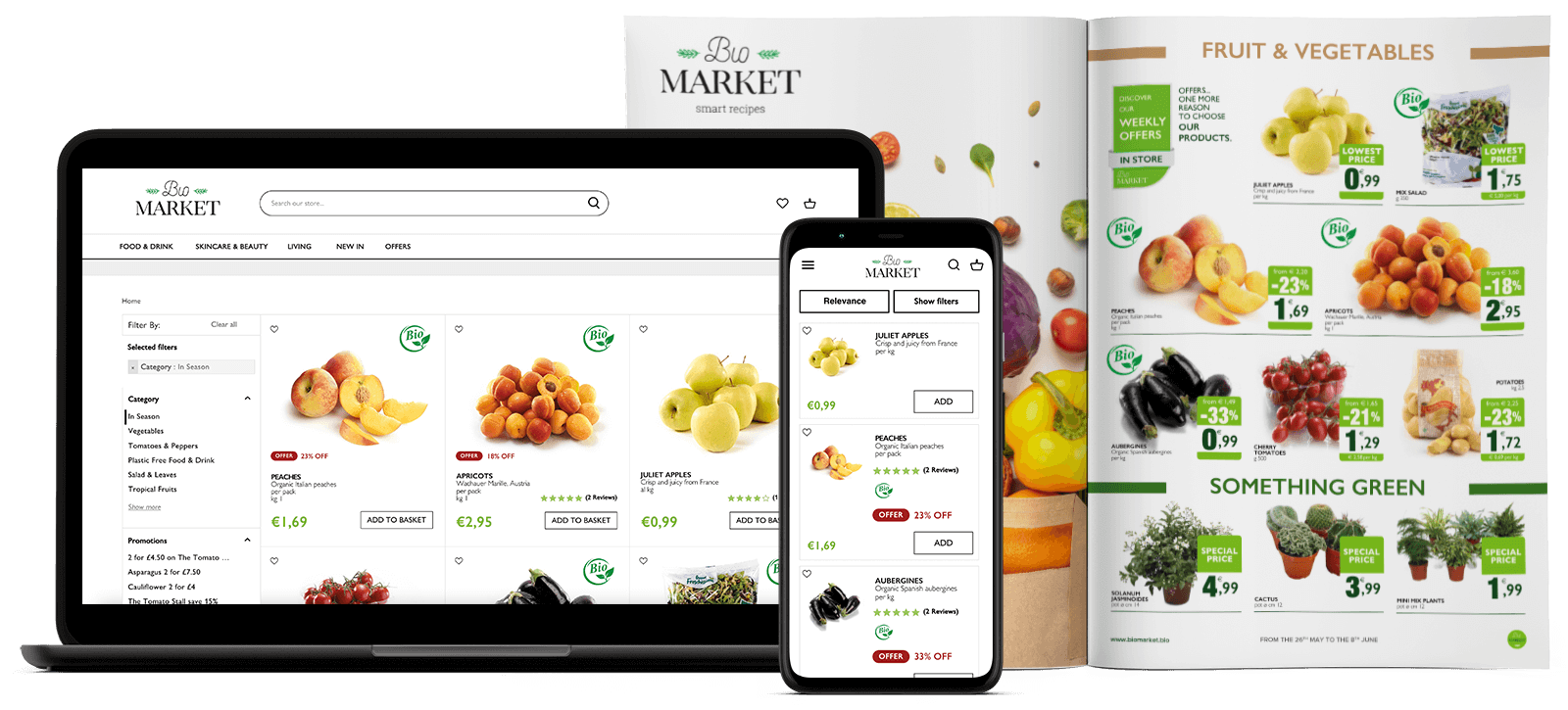
For example, when product managers update a promo price or allergen detail in the PIM, that data automatically syncs with the high-resolution product imagery in the DAM. Designers working in WoodWing Studio can instantly populate templated flyer layouts or web banners with verified SKU data – without ever manually typing a price tag or chasing down high-res packshots.
Four key benefits of content orchestration for supermarkets
1. Eradicate bottlenecks and speed up time-to-market
Manual asset management and copy-pasting slow down campaign rollouts and create unnecessary operational costs. By automating QA checks and data ingestion, supermarkets can drastically shorten campaign lead times.
Consider supplier imagery: Supermarkets handle thousands of product photos per season. An orchestrated workflow allows suppliers to upload imagery directly through an automated ingestion portal, running background validation before routing approved assets straight to e-commerce channels and layout templates.
Proven impact
After implementing our WoodWing Assets digital asset management system to streamline campaign workflows, one national supermarket chain with 71 stores reduced the time required to locate and approve campaign imagery by 97% – cutting search time from 68 hours down to just 2 hours per campaign, while reducing re-commissioning costs by 20%.
2. Establish a single source of truth for pricing & compliance
In grocery retail, displaying an incorrect price, mislabeling an allergen, or using an unapproved promo image leads to legal compliance issues and customer frustration. Content orchestration eliminates content silos by connecting your product data and creative templates directly back to the system that modern enterprises use to organize and control digital assets across all marketing touchpoints. That’s right: your DAM.
Tracking down assets, asking which is the most up-to-date version, having to call the agency, emailing files... It is death by a thousand cuts. Saving five seconds here, five seconds there seems small. But it adds up to days of extra time each month.
Owen Greenwell – Content Director at Medium Rare
Before WoodWing, we had manual processes for catalog production and assets weren't well managed. Everything we needed, we had to ask the agency for... Now everyone knows where to get the assets they need and they know they're the correct version.
Santiago Passeron – Marketing Director at La Anónima (read the full story)
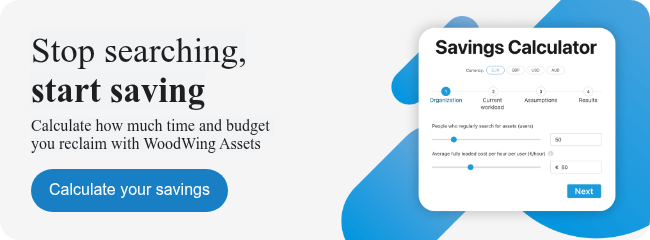
3. Scale multi-channel content without increasing headcount
Modern shoppers expect a seamless experience across every touchpoint – from in-store shelf tags to personalized app notifications. However, expanding campaign coverage shouldn't require expanding your design team at the same rate.
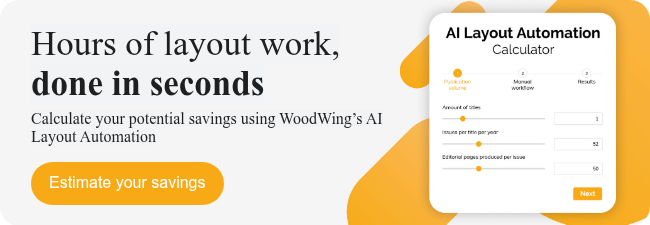
Content orchestration automates repetitive task execution – like generating multiple aspect ratios for social media, adapting print templates for localized store variants, and syncing digital signage. This enables creative staff to focus on strategy and visual storytelling rather than manual formatting.
The goal was to translate everything that we have on the shelf into our online channel... with minimal effort, without the need for double and even triple data entry processes into multiple systems.
Sally Parker – COO at Wizard Pharmacy (read the full story)
4. Reclaim control over external agency workflows
Many grocery retailers rely heavily on external agencies to manage weekly flyer design and asset formatting. While agencies bring creative value, paying them for basic data management or layout formatting is an inefficient use of budget.
By owning your content orchestration infrastructure, you maintain control over your master assets, layouts, and production history. Agencies can log directly into your system to collaborate on production without holding your asset libraries hostage.
Rather than simply replicate existing processes, we thought: ‘Wouldn't it be better to have a platform where they can create layouts, work on content, and gather feedback before sending it to their agency to finalize design?’ That idea really appealed to them.
Joris de Jong – Workflow Consultant at Graphit (supporting Dutch supermarket chain Hoogvliet)
Being able to bring in external production partners is very important. As is the ability to change production partners... We control all the data, images, layouts, and PDFs. We can end a contract and engage easily with someone new.
Samuli Jokipaltio – Co-Owner at Smartium (supporting Finnish retail giant S-Group)
Taking charge of your supermarket content engine
As retail channels continue to expand, traditional manual publishing workflows simply cannot keep pace with market demands. Content orchestration offers supermarkets a structured, scalable way to unite teams, automate asset flows, and execute flawless campaigns in less time.