.svg)
.svg)
.svg)
.svg)
.svg)
.svg)



If you work in publishing, you will have heard the alarm bells by now. Headlines like “AI summaries cause ‘devastating’ drop in audiences” and “Condé Nast CEO calls Google AI a death blow” have dominated trade press coverage over the past year. The phrase ‘Google Zero’, the moment Google stops sending traffic to third-party websites entirely, has entered the industry's lexicon as a kind of doomsday shorthand.
Is the sky actually falling? And if it is, what should publishers be doing about it?
These are the questions at the heart of The Zero-Click Content Shift, a new report from Media Voices in association with WoodWing. Drawing on research across nearly 20 countries and interviews with leading industry experts, it offers publishers something rarer than alarm – clarity. It also reflects what WoodWing has been hearing directly from publishers and content teams for some time now: awareness of the problem is high, but clarity onfidence in how to respond is not.
Zero-click search: what the data actually shows
There is no question that some publishers have been severely affected. Analysis of tech media titles showed traffic losses ranging from 62% to 97% of search referrals through 2025. Google traffic to publishers globally fell by roughly a third year on year. In the US, organic search referrals were down 38%.
Serious numbers, without question – but they don’t tell the full story. Growth agency Graphite, working with web data firm Similarweb, analyzed 40.000 of America's top websites and found that organic Google traffic was down just 2.5% overall. The top 10 US sites actually saw a 1.6% traffic increase. The impact is highly uneven, with publishers most reliant on commodity content – product reviews, lifestyle guides, and how-to articles – taking the hardest hit. Typically content that AI can synthesisze easily and serve up directly on the results page.
The data around the impact of zero-click searches may have been a little blown out of proportion, but it is crucial for publishers to understand how the different segments of their audience are discovering and accessing their content.
John Fong – MD WoodWing APAC &
AI Overviews (Google's AI-generated summaries) now appear in roughly one-third of searches. While not yet universal, they are increasingly visible in high-volume, fast-moving areas such as breaking news. That leaves substantial headroom for publishers who invest in distinctive, timely, people-led content.
How zero-click search is reshaping organic traffic
Even setting AI aside, something structural has shifted. For years, Google search was what SEO consultant Barry Adams calls ‘an endless firehose of traffic’. Publishers who did anything even half decently could expect consistent growth in referrals. That era is over. Search has become, in Adams' words, “a zero-sum channel. You get a click, your competitor does not. That's the new reality we have to get used to.”
The implication is not that SEO no longer matters – far from it. The implication is that publishers can no longer rely on Google's rising tide to lift all boats. They have to earn their share.
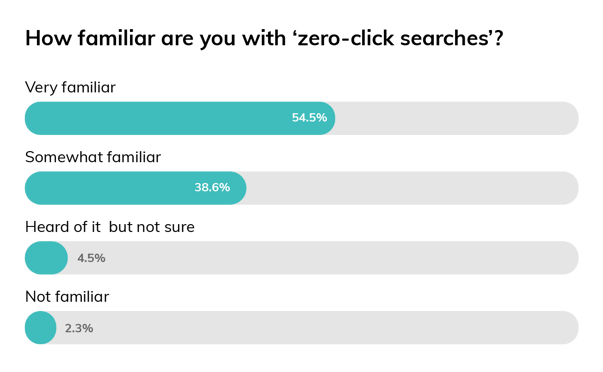
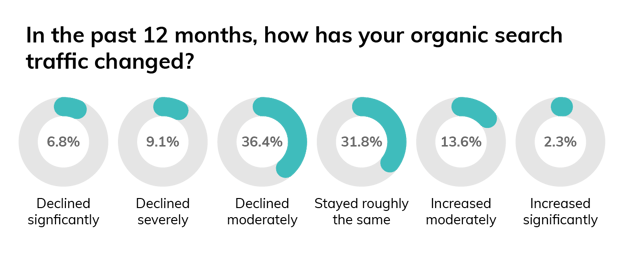
WoodWing's own survey of publishing customers, conducted across nearly 20 countries in early 2026, found that while 90% of respondents were familiar with zero-click search, more than 20% had no dedicated strategy for dealing with it yet. Awareness is high, but it has yet to translate into action. The gap between realizing the problem exists and knowing what to do, is exactly where the most important work is happening right now.
Which content survives in a zero-click search environment?
One of the most useful frameworks in the report comes from a masterclass led by Stuart Forrest, former Global Audience Director at Bauer Media, and David Buttle, former AI Lead at the Financial Times. It asks publishers to evaluate their content against three characteristics: distinctiveness, emotional resonance, and accuracy. Generic, widely available information scores low on all three, and it is precisely this content that AI Overviews are absorbing most aggressively. Original reporting, expert analysis, investigative journalism, and content with real consequences for accuracy all score high and are far more resilient.
I think this is where hardcore journalism thrives. Nobody can do investigative journalism like a human being. Regardless of which AI engine you use, there will be a caution to ‘please check the facts’. This is where storytelling, traditional journalism, really, really comes out strong.
John Fong – MD WoodWing APAC &
From traffic dependency to audience ownership
The most consistent thread running through the report is this: publishers that have always put their audiences first are the ones weathering zero-click best. Publishers with strong direct relationships, loyal subscriber bases, and genuine editorial differentiation are in a fundamentally stronger position than those whose business model rests on Google-referred programmatic revenue.
“They rely too much on search engines”, says John Fong about publishers caught in the traffic trap. “As a publisher, a content producer, you need to own your audience. You won't have to worry about what comes next, AI or AEO, because you actually know your audience. You know what they want and you can serve them directly.”
Building that direct ownership means investing in newsletters, apps, podcasts, and membership programs. It means developing content that gives people a reason to seek you out rather than stumble across you via Google. As audience growth consultant Clara Soteras puts it: “it means creating communities, not just page views.”

It also means thinking differently about the content archives and institutional knowledge publishers already hold. Decades of structured, rights-managed content is not just a legacy asset – in an AI-driven landscape, it may prove to be one of publishing's most valuable and underutilized resources.
Zero-click search: threat or strategic shift?
Google Zero, the complete absence of referral traffic, is not here yet, and most experts believe the full scenario remains a long way off. But zero-click search is real, it is here now, and it is accelerating. Publishers who treat it as a catalyst for building something better, more audience-focused, more distinctive, and less Google-dependent stand to emerge stronger.
As the report puts it: the zero-click content shift might just be the catalyst for making your publishing business more self-reliant, sustainable, and commercially resilient.
Want the full picture?
Download The Zero-Click Content Shift report, researched and written by Media Voices in association with WoodWing.